simplifies
the measurement of cardiovascular risk

scroll to explore

A non-invasive, operator independent solution for assessing arterial stiffness by measuring pulse wave velocity.

Discover
How it works

Prevent cardiovascular risks with the pOpmètre

Class IIa Medical Device
Cardiovascular Risk Prevention
Rapid Vascular Assessment
Non-Invasive Clinical Solution

Class IIa Medical Device with Clinical Validation

An innovative, non-operator-dependent, clinically-validated medical device that predicts cardiovascular risk in seconds by measuring arterial stiffness.

A New Standard in Cardiovascular Prevention

The pOpmètre® revolutionizes cardiovascular prevention by measuring pulse wave velocity (PWV) and calculating ankle brachial index and central pressures.

Rapid and Patient-Friendly Diagnostic Insights

The advantage of the pOpmètre® is also to provide the patient with a clear data point : vascular age, a more motivating indicator to help patients adopt healthy lifestyles.

Efficient, Reliable and Non-Invasive Screening

Its high reproducibility, compact format, and easy use make the pOpmètre® an asset for all medical specialties.

Image
Image
Image
Image
Image
Image
Image
Image
Image

Clinics and Hospitals

The pOpmètre® is an asset for both you and your patients: cardiovascular risk measurement and assessment can be carried out in just a few minutes, while respecting your patients' privacy.

Image

General practitioners

With the pOpmètre®, introduce the measurement of arterial elasticity into the care pathway, thus promoting screening and prevention of cardiovascular risks.

Image

Specialized physicians

The pOpmètre® assesses arterial stiffness, an essential biomarker for the prevention of stroke, heart attack and cognitive impairment.

Image

Multidisciplinary health centers

The advantage of the pOpmètre® is also to provide important data to the patient so that they can visualize and become fully aware of their health status.

Refining Cardiovascular Risk Assessment Through Pulse Wave Velocity Measurement

Learn More
01
02
03
04

They trust us

Image

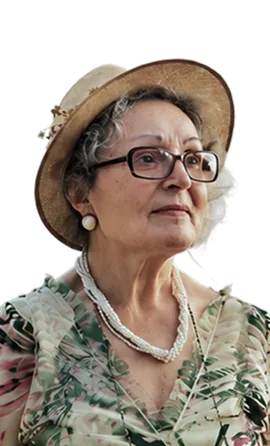
Elysabeth | Women's Heart Health Day

"They told me I had the arteries of a 52-year-old!" At 67, Elysabeth lives in Chaniers, near Saintes, and decided to take a proactive approach to her health.

"I have no family history of cardiovascular disease, but this was a great opportunity for a full check-up, close to home. I took advantage of it!"

Image

Chantal, 61 ans

Clinical case: Ischemic stroke, no hypertension, diabetes or cholesterol. Investigated after rigorous medical evaluation, including one-week ECG Holter and endoesophageal PWV of 20 m/s (equivalent to vascular age of 100 years).

Treatments: ACE inhibitors, beta-blockers, aspirin and sports nutrition > antioxidants, coriander and pears, including garlic.

Results: Three years later, PWV is 12 m/s

Image

Elysabeth | Women's Heart Health Day

"They told me I had the arteries of a 52-year-old!" At 67, Elysabeth lives in Chaniers, near Saintes, and decided to take a proactive approach to her health.

"I have no family history of cardiovascular disease, but this was a great opportunity for a full check-up, close to home. I took advantage of it!"

Image

Chantal, 61 ans

Clinical case: Ischemic stroke, no hypertension, diabetes or cholesterol. Investigated after rigorous medical evaluation, including one-week ECG Holter and endoesophageal PWV of 20 m/s (equivalent to vascular age of 100 years).

Treatments: ACE inhibitors, beta-blockers, aspirin and sports nutrition > antioxidants, coriander and pears, including garlic.

Results: Three years later, PWV is 12 m/s

Image

Elysabeth | Women's Heart Health Day

"They told me I had the arteries of a 52-year-old!" At 67, Elysabeth lives in Chaniers, near Saintes, and decided to take a proactive approach to her health.

"I have no family history of cardiovascular disease, but this was a great opportunity for a full check-up, close to home. I took advantage of it!"

The Blog

Discover our articles,
our advice, our events & more

Image

Sleep Disorders and Arterial Stiffness

The association between sleep disorders and cardiovascular risk has been demonstrated in numerous studies; as both a risk factor and a preventive measure, each aspect of sleep influences the likelihood of a cardiovascular event occurring.

Image

Sleep Disorders and Arterial Stiffness

The association between sleep disorders and cardiovascular risk has been demonstrated in numerous studies; as both a risk factor and a preventive measure, each aspect of sleep influences the likelihood of a cardiovascular event occurring.

Image

Sleep Disorders and Arterial Stiffness

The association between sleep disorders and cardiovascular risk has been demonstrated in numerous studies; as both a risk factor and a preventive measure, each aspect of sleep influences the likelihood of a cardiovascular event occurring.

Read all Articles

Stay Connected to Cardiovascular Innovation

Stay Informed with Axelife

Receive the latest news, clinical insights and updates on cardiovascular prevention.

Everything You Need to Know

Can’t find the answer you’re looking for? Contact us and our team will be happy to help.

Contact Us

What is Plethysmography?

Plethysmography is a measurement method used to determine volume changes in a specific part of the body. These volume changes can be caused by variations in the amount of blood or air in the area concerned.

In the medical field, plethysmography is often used to assess lung function by measuring changes in air volume in the lungs. This can help diagnose conditions such as asthma or chronic obstructive pulmonary disease (COPD).

There is also a method called impedance plethysmography, which measures blood volume changes, for example in the limbs, by observing changes in the electrical resistance of the body part concerned. This technique can be used to detect problems such as venous insufficiency or edema.

What is a Stroke (CVA) ?

A Stroke (Cerebrovascular Accident, or CVA), also known as a 'brain attack,' occurs when a blood vessel supplying the brain is blocked by a clot (ischemic stroke) or bursts (hemorrhagic stroke). As a result, a part of the brain no longer receives the oxygen and nutrients it needs, leading to the death of brain cells.

Strokes can cause significant and permanent effects depending on the part of the brain affected and the duration of the blood flow interruption. Common symptoms include difficulty speaking, weakness or numbness on one side of the body, vision problems, sudden and severe headaches, and difficulty walking or imbalance.

Strokes are a medical emergency. Rapid treatment is crucial to minimize brain damage and prevent other potential complications
What is the role of the arteries?

Arteries play an essential role in the circulatory system, transporting oxygenated blood from the heart to various parts of the body.

They are also involved in regulating blood pressure, thanks to their capacity to contract and dilate. In this way, arteries contribute to the maintenance of life and the functional activity of all organs.

How to use the pOpmètre® ?

The examination takes just 14 seconds.

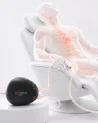
Before placing the sensors, your patient should lie down for a few minutes in a quiet environment. The sensors, similar to those on pulse oximeters, are placed on the finger and toe, without the need to undress the patient.

What are the examination conditions?

  • Quiet room
  • Constant brightness
  • Temperature around 22°C
  • Patient lying down